Software development is a field of ideas and experiments. One idea leads to an experiment that spawns another idea and the cycle of innovation moves forward.
Open-source projects are the fuel for this innovation.
A good open-source project impacts the lives of many developers and creates a fertile environment for collaboration. Many of the greatest breakthroughs in software development have come from open-source projects.
In this post, we will look at 15 high-impact open-source projects that have changed the lives of many developers.
To come up with the list, we tried to look at the overall impact these projects have created on the industry and related technologies. Also, we’ve focused on projects that have led to a big change in the day-to-day lives of many software developers across the world.
Unless you’ve been living in a cave, there’s no way you haven’t heard about Linux.
Linux is an open-source operating system created by Linus Torvalds. Like many open-source projects, it was originally started as a hobby project.
And then, it took over the world.
Linux runs on all sorts of computer systems such as PCs, mobiles and servers. It also runs on more unexpected places such as a washing machine, cars and robots. Even the Large Hadron Collider uses Linux.
However, the biggest impact of Linux is how it has democratized the world of software development by providing a free and open-source operating system.
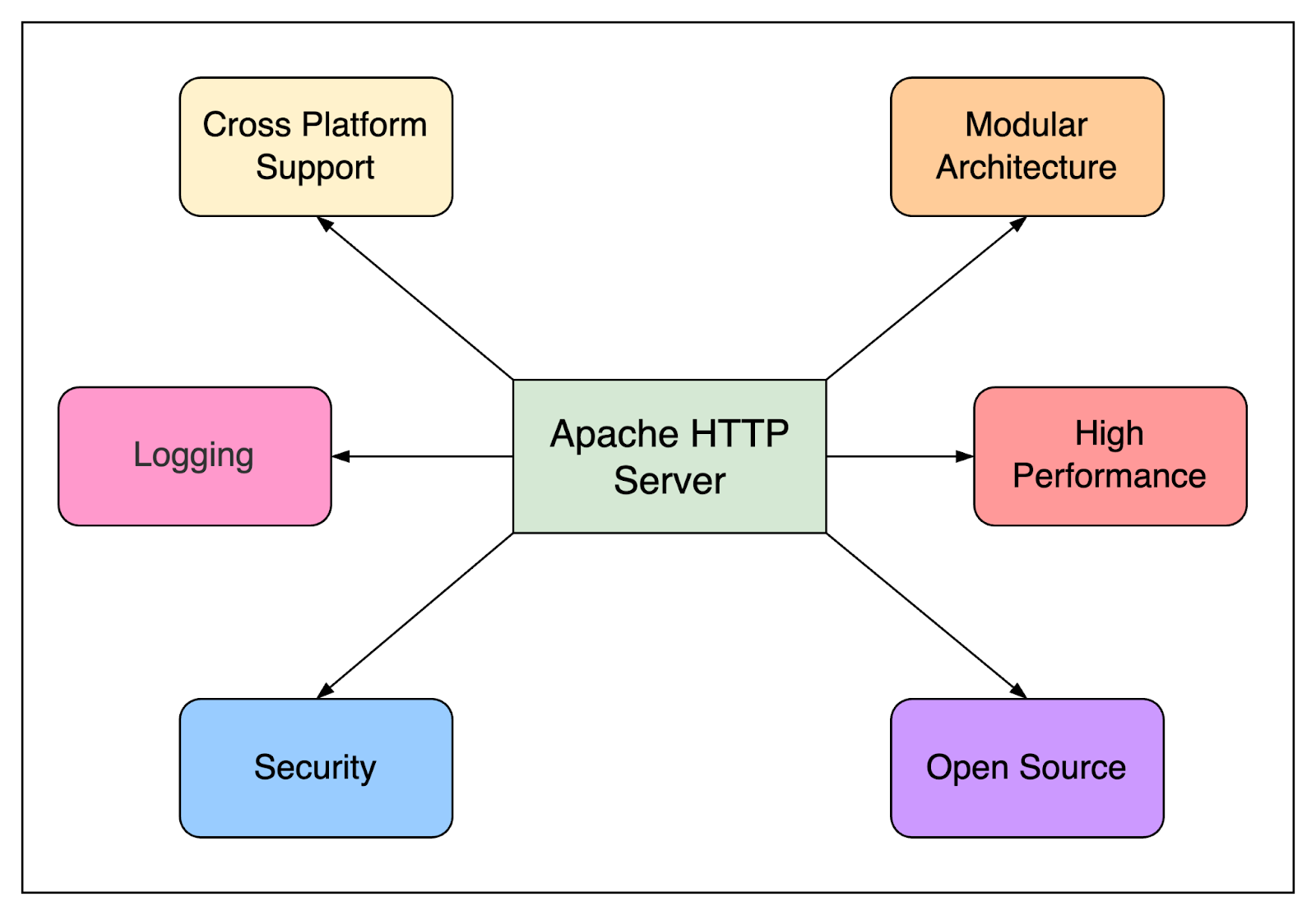
Apache HTTP Server is a free and open-source web server that powers a large percentage of websites on the internet.
Ever since its release in 1995, the Apache HTTP server has been a tireless workhorse. It’s versatile enough in terms of security and agility to be adopted by enterprises and startups alike.
Over the years, Apache HTTP Server has inspired so many web servers such as Nginx, Lighttpd, Caddy and so on.
Git hardly needs any introduction.
If you’ve worked as a developer in any capacity, there is a 100% chance you’ve used Git or at least, heard about it.
Git is a free and open-source version control system for software development. And you may be surprised to know that it was also created by Linus Torvalds along with his team.
But why?
Yes, you guessed it right. Linus did it to manage the source code of the Linux kernel project. That’s why people say that the best open-source projects come from your own requirements.
Git has been super-transformative for the way the software industry operates. It provided a standard way of tracking, comparing and applying version control on the source code, leading to the birth of revolutionary products such as GitHub and Bitbucket.
JavaScript was always the preferred language for browser-based development. But it would have stayed just a browser language had it not been for Node.js
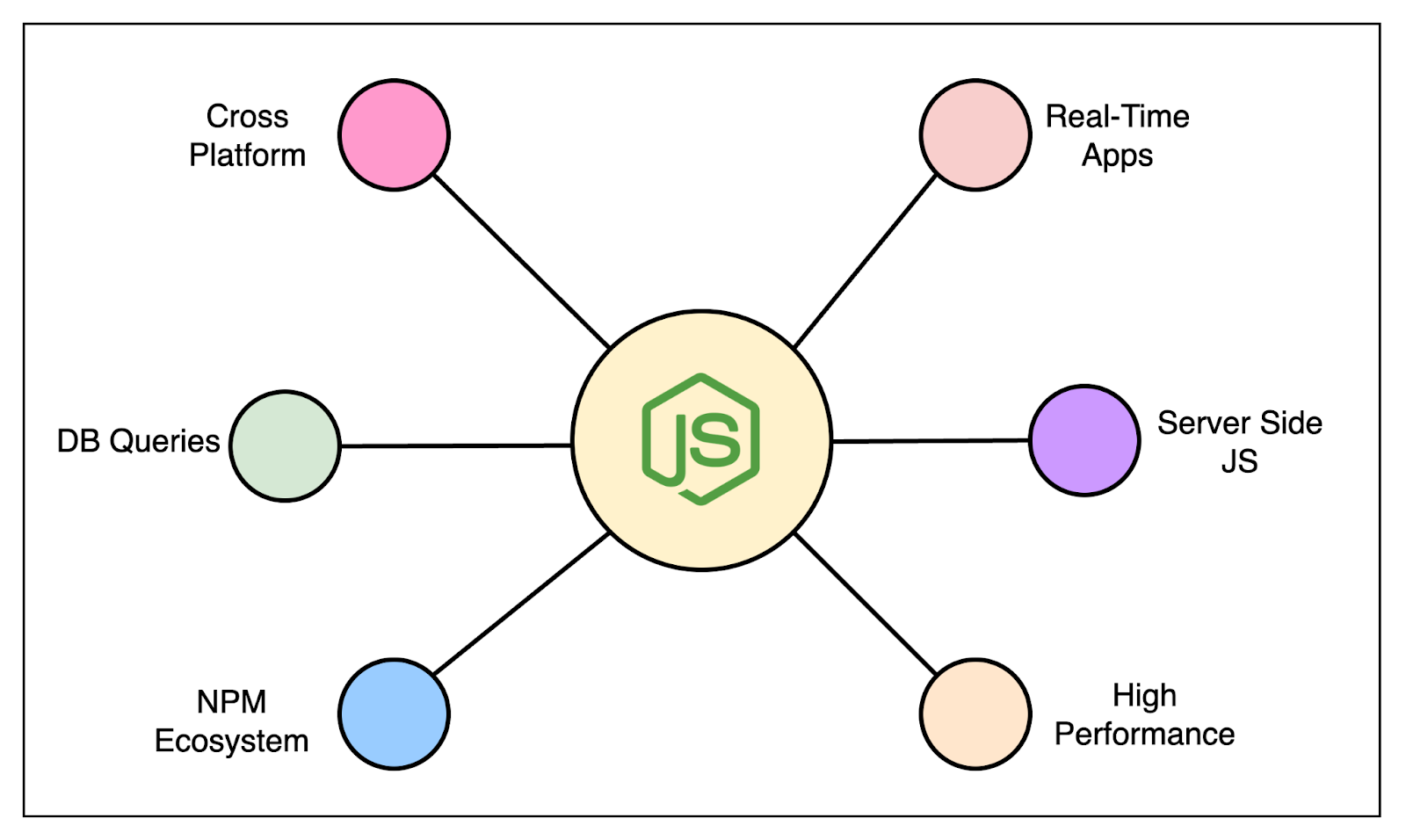
Node.js is an open-source cross-platform JavaScript runtime environment for server-side programming.
In other words, Node.js brought JavaScript to backend development.
With its release in 2009, Node.js quickly became a popular choice for building scalable and high-performance web applications. It paved the way for using the same language for both client-side and server-side programming.
It’s no secret that developers love to build applications and test them on their machines.
But no one loves the pressure of deploying the same application to production.
There’s always one pesky environment issue or version mismatch on the production server that brings the entire application down.
And developers can only say - “It worked fine on my machine.”
To which, they get the answer - “Yes, but we can’t ship your machine to production.”
Docker made it possible.
As an open-source platform, Docker allows developers to package and deploy applications in a consistent and portable way.
The application-specific packages and all the environmental dependencies are packaged in a Docker container image. This image can then be deployed wherever needed.
There are a lot of jokes and memes about Kubernetes on the internet. Most of them make it sound like Kubernetes is an overkill.
That’s definitely true to a large extent.
However, Kubernetes has been a huge boost towards Cloud Native software development. It was released in 2014 and since then, it has spawned thousands of other open-source projects within the Cloud Native ecosystem.
But what’s the reason for this popularity?
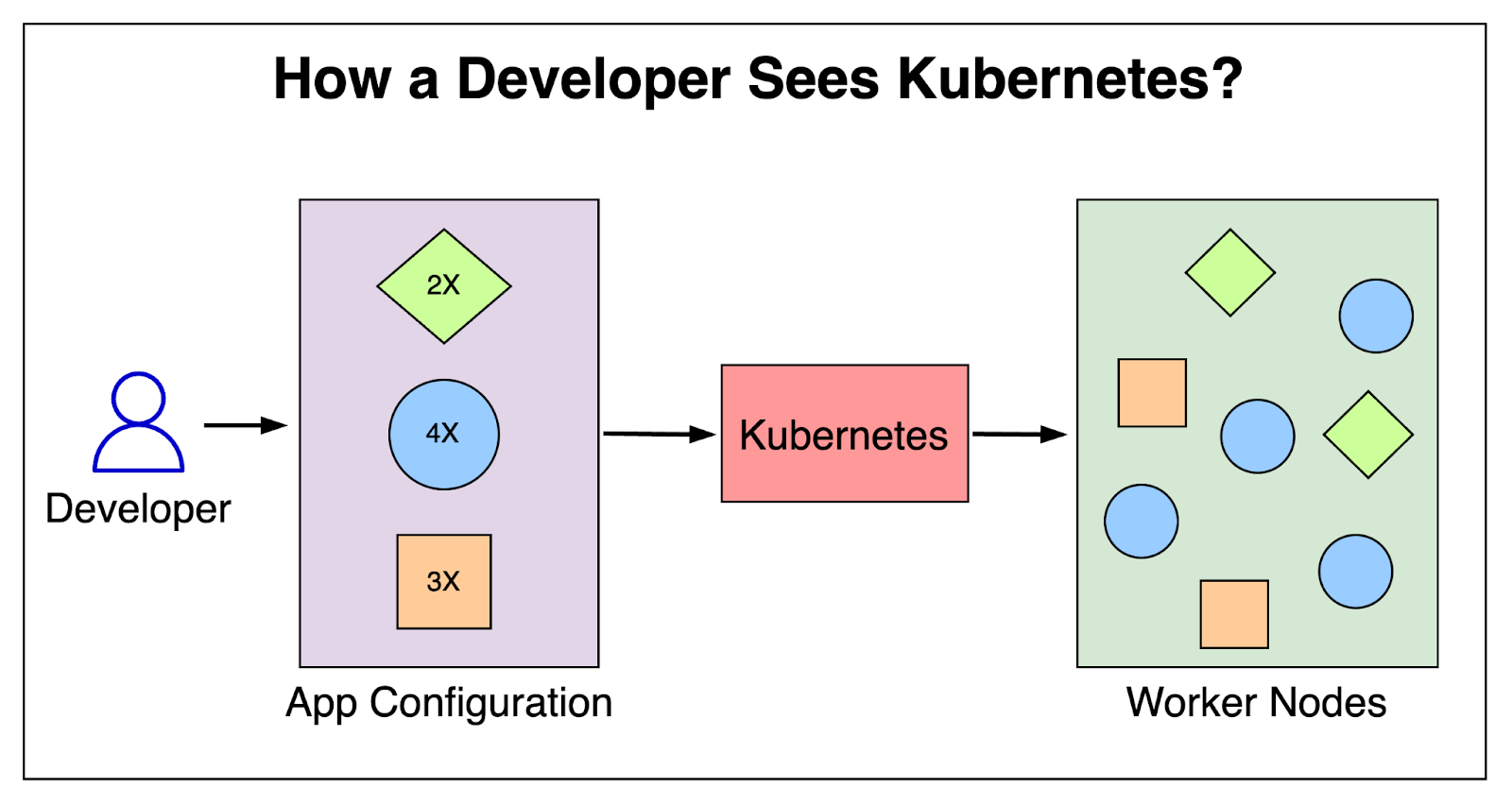
Turns out, Kubernetes becomes a necessity when it comes to managing multiple containers and their life-cycle. With its declarative syntax, Kubernetes lets developers carry out automatic deployment, scaling and management of containerized applications.
PostgreSQL is an open-source relational database management system used to handle large amounts of data.
It was first released in 1996 and has become one of the most popular choices of building applications.
PostgreSQL had a big impact on the industry in terms of database management systems. Before it, you didn’t have a lot of database options in the open-source space.
PostgreSQL provided a free but high-quality open-source alternative to costly database management systems.
As software development moved to distributed architecture, data became the most important component for most organizations.
Each and every organization wants to harness the power of data they possess whether it be social media companies, e-commerce giants or search-engines.
However, analyzing data is not the same as storing it in a transactional database.
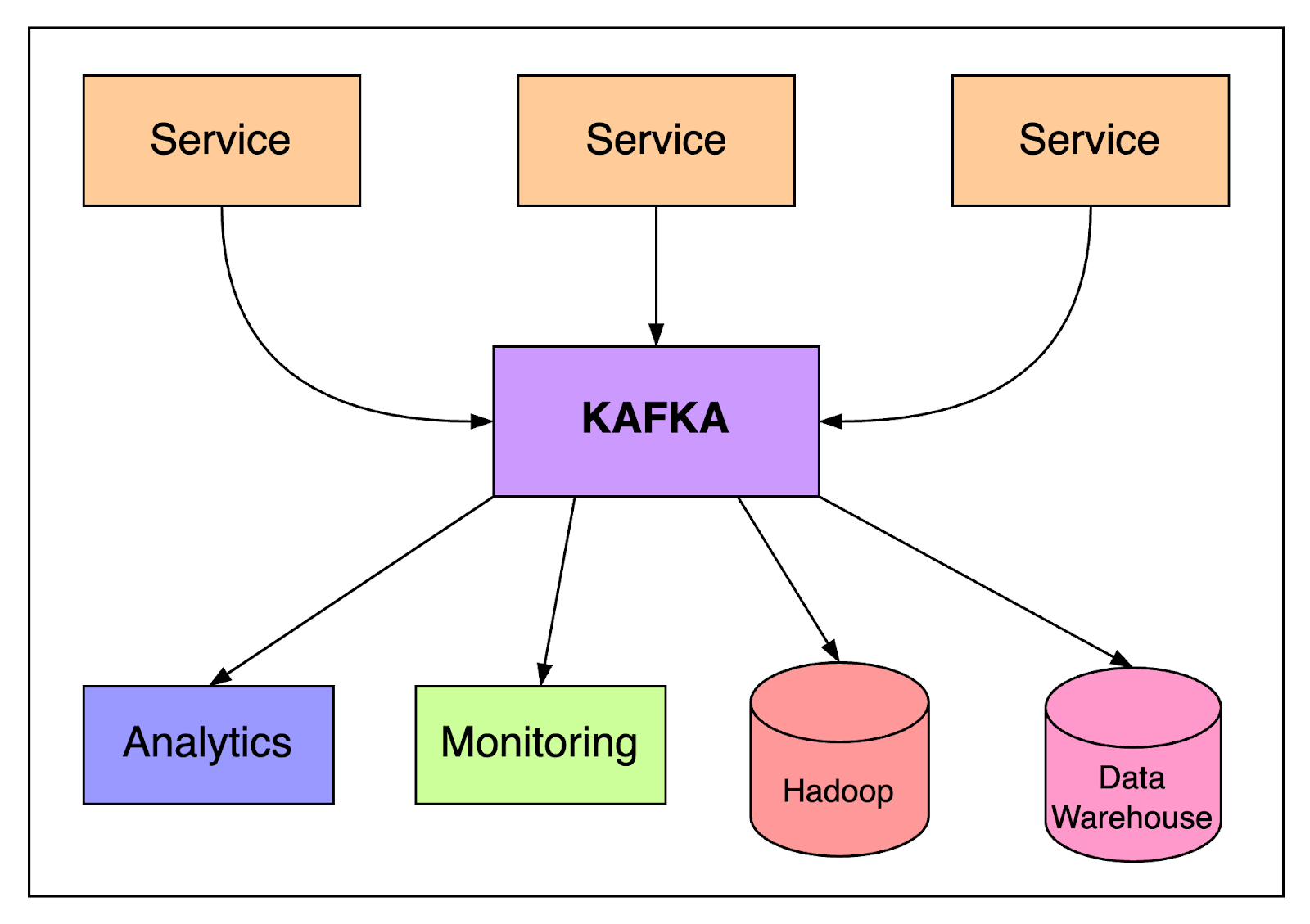
To derive value from the data, you have to move it from the source of generation to a suitable platform where analytics workload can be executed. Moreover, this movement has to be real-time in order to extract the highest value.
Eventually, Apache Kafka was created in 2011 by engineers at LinkedIn.
It was made open-source and soon became the standard platform for building real-time data pipelines and applications.
Kafka has now been adopted by organizations across the world operating in many different domains. Wherever there is large scale movement of danvolved, Kafka is often the first choice.
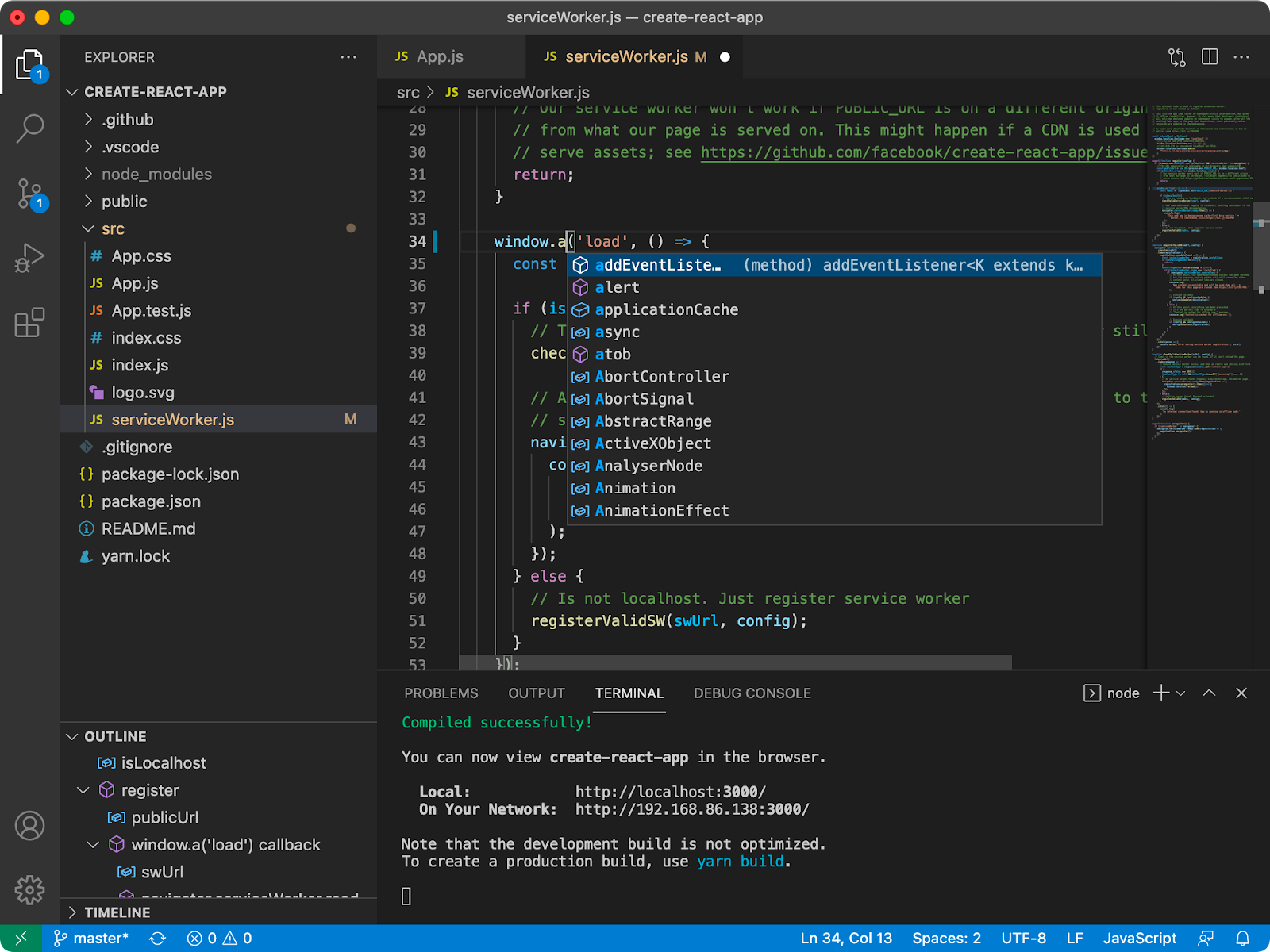
Every developer has heard of VS Code. It’s one of the most popular source-code editors in the world.
Originally built by Microsoft, it was made open-source. Ever since then, it has only grown in popularity with a huge number of plugins released by developers to enhance it for every purpose imaginable.
VS Code is highly customizable and efficient for coding with features like Intellisense and debugging
As the volume of data generated by applications grows, search and analytics turned into critical requirements.
This led to the development of a powerful and scalable open-source solution known as ElasticSearch.
ElasticSearch helps users search, analyze, and visualize large volumes of data quickly and efficiently. It can easily support use-cases like full-text search engines to log analysis.
Machine Learning has been one of the hottest fields in software development for the last decade or so. A lot of innovations have happened in this area.
TensorFlow is one of the most impactful open-source projects in this space.
It was developed by Google and released in 2015 with the aim of building and training machine learning models. Despite competition from other frameworks like PyTorch, TensorFlow has remained a leading choice for machine learning.
The open-source nature of TensorFlow enables smaller organizations and individuals to leverage powerful machine learning techniques. Also, TensorFlow is quite versatile and supports various applications such as image recognition, natural language processing and machine translation
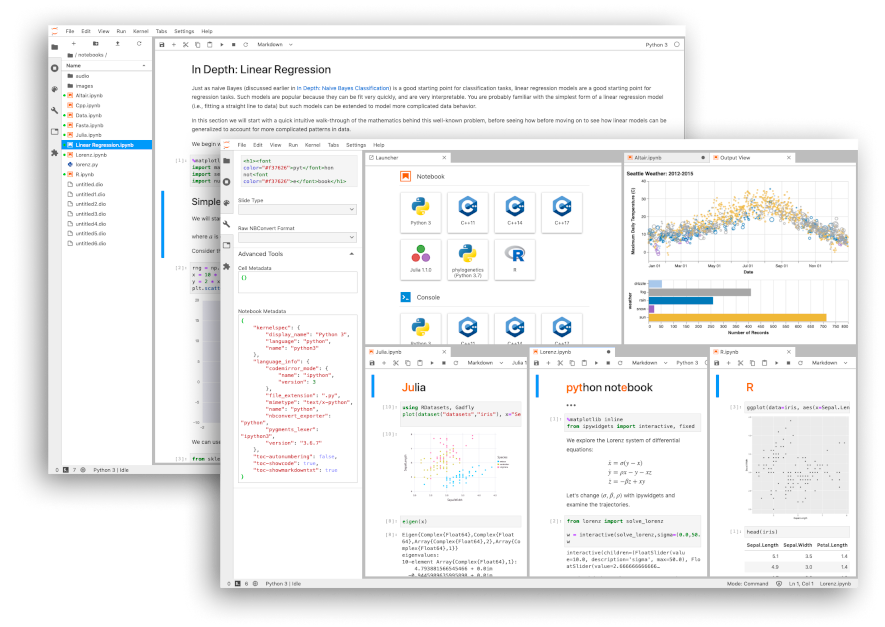
Jupyter Notebooks is an open-source web application used for creating and sharing documents that contain live code, equations, visualizations and narrative text.
It was first released in 2014 and has since become a popular tool for data scientists and researchers.
What makes Jupyter Notebooks so good is that everything you do is easily reproducible. You just need to share your notebook with the other person and all the steps of an experiment are available to them.
The list of high-impact open-source projects would be incomplete without React.
It doesn’t matter whether you love or hate React, you cannot deny that React has made an enormous impact on web development.
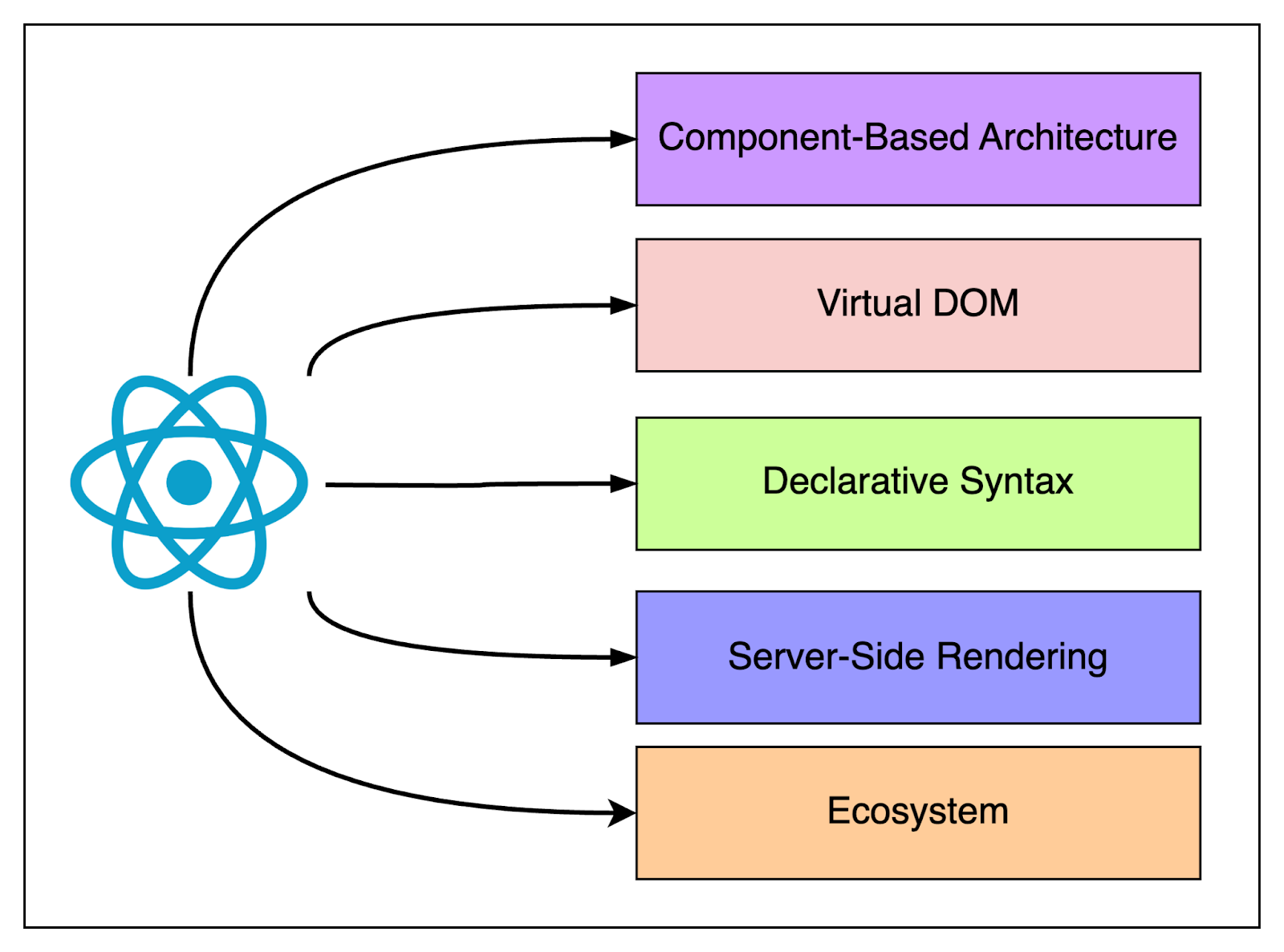
React’s component-based architecture and the concept of Virtual DOM made these ideas popular in the industry.
Also, React has led to the development of leading frameworks such as Next.js, resulting in widespread adoption. You can also attribute so many software development jobs to React. These reasons turn React into a very important open-source project.
As performance became a mandatory attribute of internet-based applications, developers had to invent new tools to boost performance.
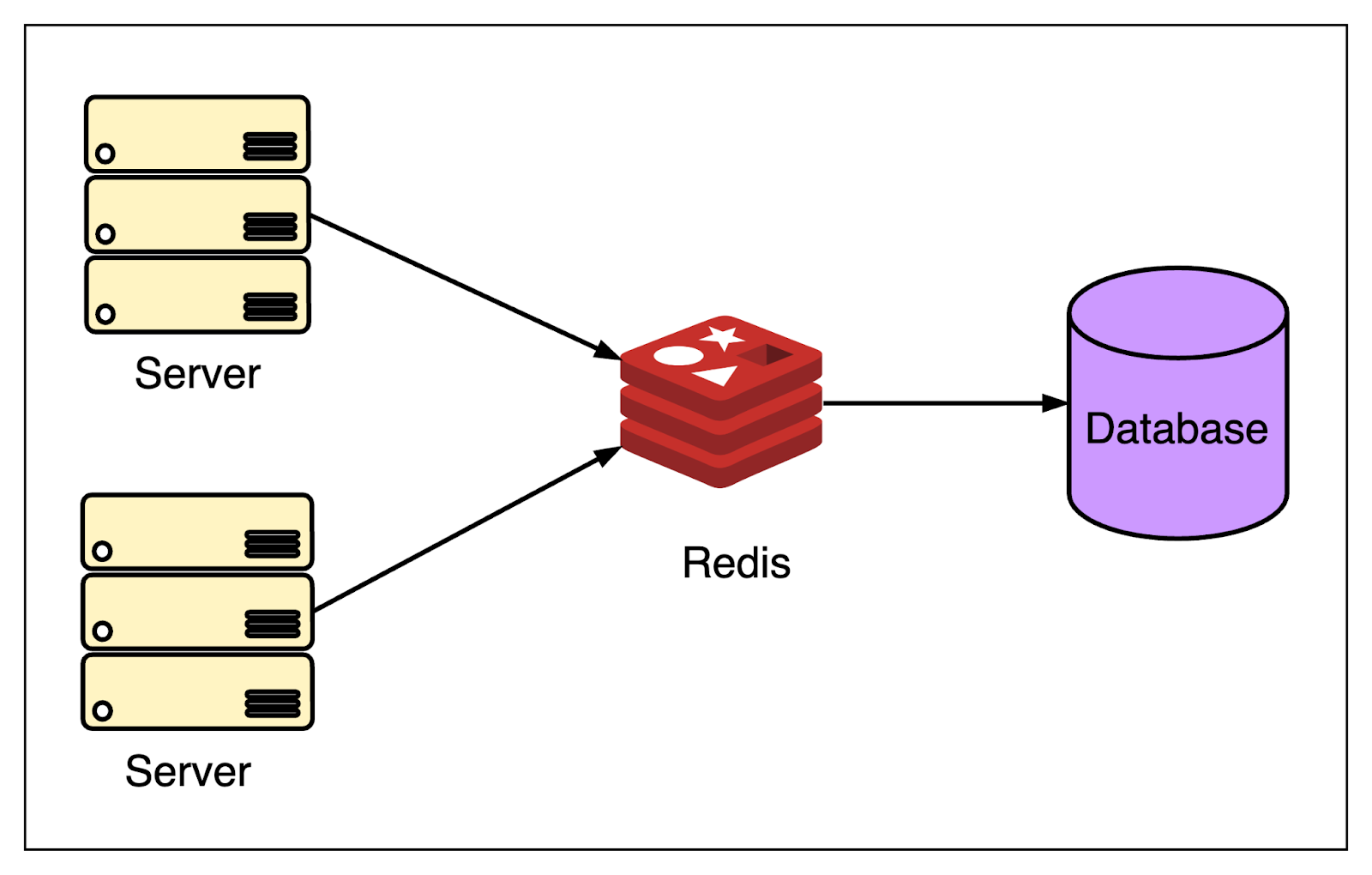
It was during this time that Redis was developed as an open-source, in-memory data store.
The versatility of Redis made it an instant hit among the developers at enterprises as well as startups. You could use Redis as a cache, a message broker and even general-purpose storage. For every use-case, it provides fast performance and scalability.
Over time, Redis has become the de-facto standard whenever there is a need for a high-performing in-memory store.
Apache Spark is an open-source distributed computing system for large-scale data processing.
Many companies use Apache Spark as a standard tool for big data processing and analytics workflows. The great part about Apache Spark is that it supports multiple programming languages.
Spark allows for real-time processing of data streams, making it a great choice for applications that require immediate analysis of data such as fraud detection, social media sentiment analysis and IoT data processing.