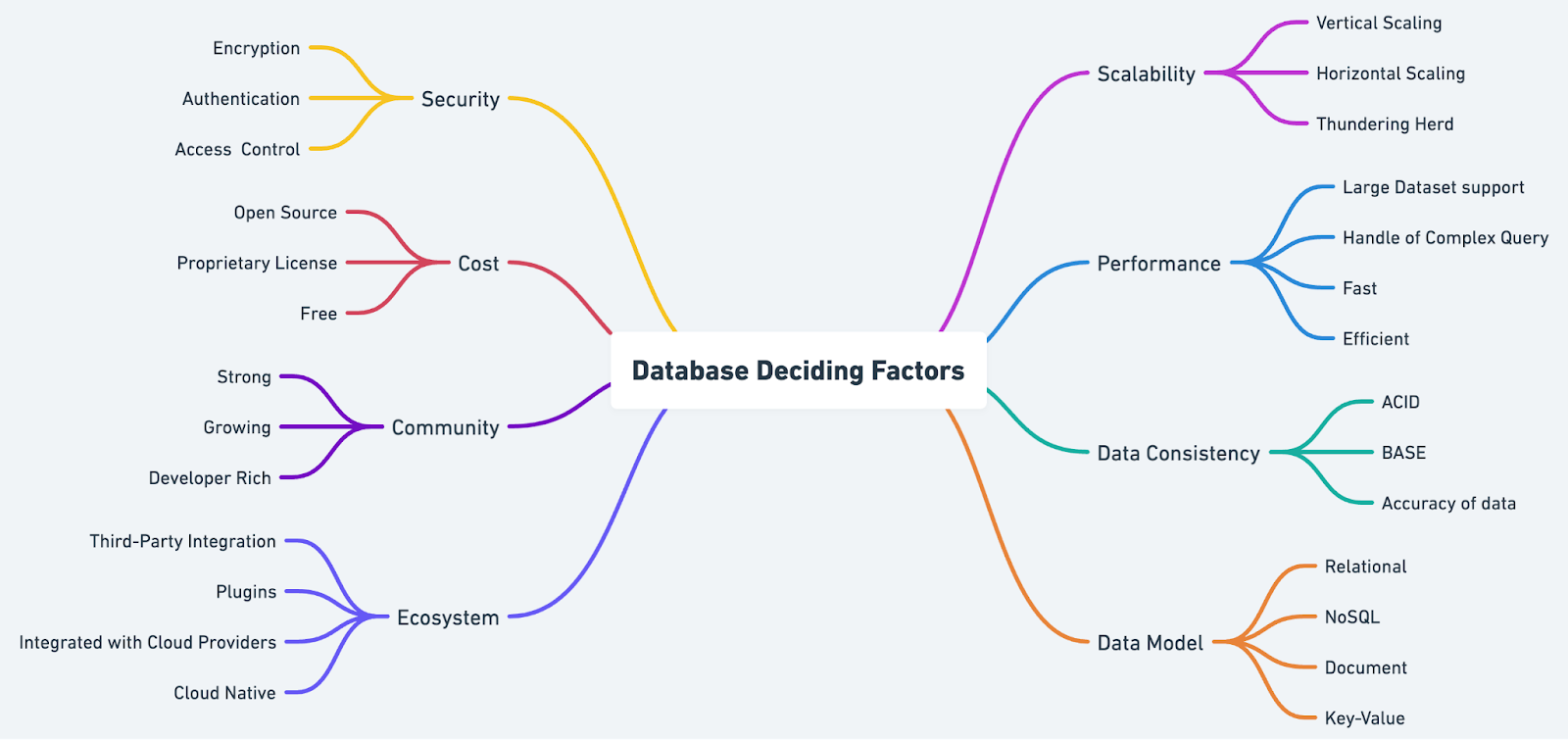
In the first part of our series, we laid the foundation for understanding the various types of databases and their use cases. As we continue to explore the art of database selection, we will now dive deeper into the critical factors that influence this decision-making process. By examining each factor in greater detail, we can better equip ourselves to make informed choices that align with our project requirements and drive the success of our software development projects.
Scalability is a critical aspect of any database. It determines how well the system can accommodate growth. Two primary methods of scaling exist: vertical and horizontal. Vertical scaling involves increasing the capacity of a single server by adding resources such as memory or CPU. Horizontal scaling, on the other hand, involves adding more servers to the system.
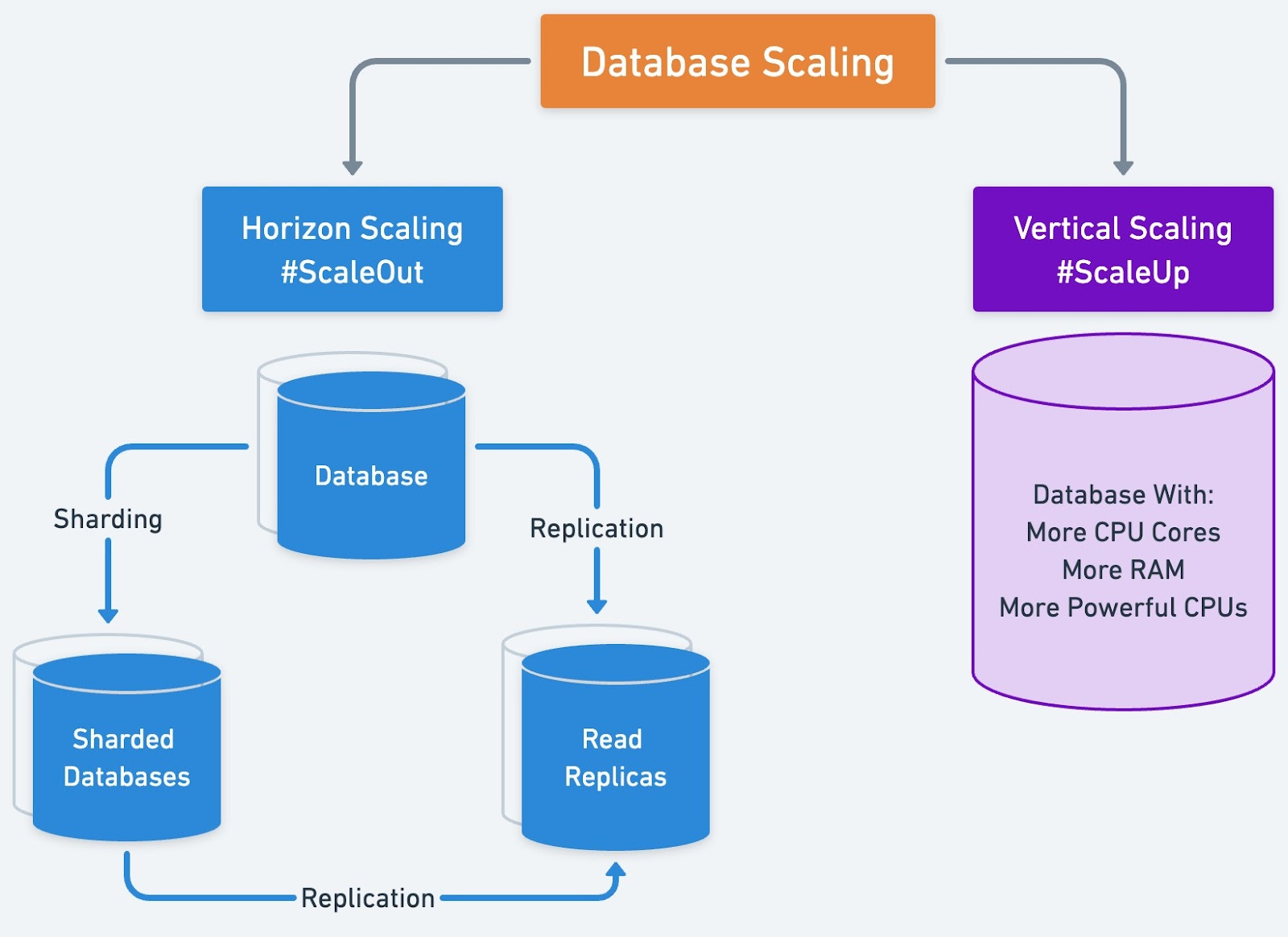
Different database types handle scaling in various ways. For instance, relational databases can struggle with horizontal scaling, while NoSQL databases often excel in this area. When selecting a database, consider the expected growth of the project and how well the database can handle such expansion.
To evaluate a database's scalability, we must first understand its architecture and design principles. Relational databases, for example, store data in tables with a predefined schema, and they may struggle to scale horizontally due to the need to maintain consistency across multiple servers. This challenge can lead to performance bottlenecks when dealing with large amounts of data or high-traffic workloads.
NoSQL databases, on the other hand, were designed with scalability in mind. They employ various strategies, such as sharding and partitioning, to distribute data across multiple servers. This approach allows for more efficient horizontal scaling and can better handle growing data volumes and traffic loads. However, NoSQL databases may sacrifice some level of data consistency to achieve this scalability.
NewSQL databases aim to combine the best of both worlds by offering the scalability of NoSQL databases and the transactional consistency of relational databases. These databases employ innovative architectures and techniques to distribute data and maintain consistency across multiple servers. It enables efficient horizontal scaling without compromising on consistency. However, there are drawbacks to consider. NewSQL databases may lack the maturity of traditional systems, leading to limited community support and resources. Their complexity can create a steeper learning curve for developers, increasing the time and effort needed for implementation and maintenance.
Time-series databases, designed for handling time-based data, can also scale well as the volume of data grows. They use specialized indexing and compression techniques to efficiently store and query large volumes of time-series data, making them an ideal choice for applications that generate a high volume of time-stamped information, such as IoT or monitoring systems.
When selecting a database, consider the expected growth of the project and how well the database can handle such expansion. Assess the database's ability to scale vertically or horizontally, and evaluate its performance under increasing data volumes and traffic loads.
Performance is another essential factor in choosing a database. It directly impacts the user experience. Query efficiency and the balance between read and write performance should be considered. Some databases may be optimized for read-heavy workloads, while others may prioritize write performance. Understanding your project's specific performance requirements will help you identify the most suitable database type.
To evaluate a database's performance, we should start by examining its query efficiency. Relational databases usually provide efficient querying capabilities due to their structured schema and support for SQL. Their performance is often optimized for complex queries involving joins and aggregations. However, as data volume and complexity increase, query performance may degrade, especially when dealing with large datasets.
NoSQL databases, on the other hand, can offer faster write speeds due to their simpler data models and more flexible schemas. This performance advantage can be particularly beneficial in scenarios where data is constantly being generated and updated, such as streaming applications or real-time analytics. However, NoSQL databases may not be as efficient when it comes to complex queries or aggregations, as they lack the same level of support for SQL and structured schemas.
NewSQL databases aim to provide both efficient querying capabilities and high write performance by combining the strengths of relational and NoSQL databases. They often employ innovative techniques, such as distributed query processing and advanced indexing, to deliver high-performance querying and write capabilities. As a result, NewSQL databases can be a good choice for applications that require both complex querying and high write performance.
Time-series databases are designed for handling time-based data, and their performance is optimized for this specific use case. They employ specialized indexing and compression techniques to efficiently store and query large volumes of time-series data. This focus on time-based data allows time-series databases to deliver high performance for applications that generate a high volume of time-stamped information, such as IoT or monitoring systems.
When selecting a database, it is crucial to understand the performance requirements of the project. This will directly impact the user experience. Consider the balance between read and write performance, as well as the efficiency of query processing. By carefully evaluating the performance characteristics of different database types in the context of the project's needs, we can choose a database that will deliver the optimal user experience and support the success of the application.
Data consistency ensures that the information in the database remains accurate and up-to-date. To achieve consistency, databases often rely on the ACID properties (Atomicity, Consistency, Isolation, and Durability) and the CAP theorem (Consistency, Availability, and Partition tolerance). Different databases prioritize these aspects differently, resulting in various consistency levels.
To assess a database's approach to data consistency, we should begin by examining its adherence to the ACID properties. Relational databases typically emphasize strong consistency. It ensures that every transaction maintains the integrity of the data. They achieve this by implementing the ACID properties, which specify that transactions are atomic, consistent, isolated, and durable.
The CAP theorem states that a distributed database system can only achieve two out of the three properties: consistency, availability, and partition tolerance. This theorem highlights the trade-offs that databases must make when it comes to consistency, and it can be a useful tool for understanding the consistency model of various database types.

While the CAP theorem is well-known, a better mental model to follow when evaluating a database is the PACELC theorem. The PACELC theorem states that if a system is Partition tolerant, it must choose between Availability and Consistency during a network partition and between Latency and Consistency when the network is operating normally. This theorem highlights the trade-offs that databases must make when it comes to consistency and can be a useful tool for understanding the consistency model of various database types.
NoSQL databases often lean towards eventual consistency. Updates to the data will eventually propagate across all nodes in the system, but they may not be immediately visible. This approach allows for higher availability and better performance in distributed systems, but it can result in temporary inconsistencies between nodes.
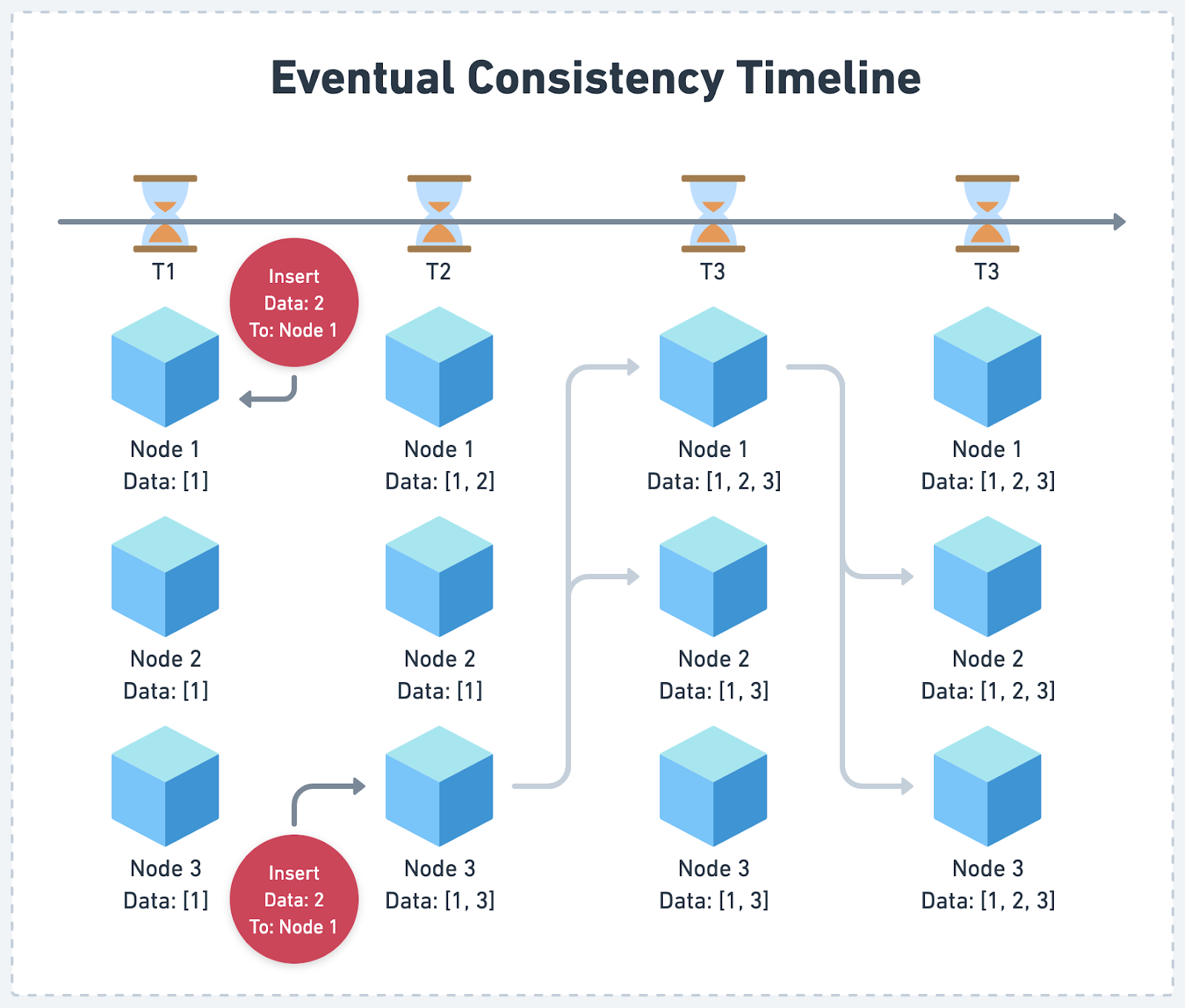
When selecting a database, consider the importance of consistency in the project and how it might impact the user experience. For some applications, such as financial transactions, strong consistency is essential to ensure data integrity and avoid errors. In contrast, for other applications, like social media feeds or search indexes, eventual consistency may be sufficient, as temporary inconsistencies are less likely to negatively impact the user experience.
It is crucial to understand the trade-offs between consistency, availability, and partition tolerance when selecting a database. By carefully considering the consistency requirements of the project and evaluating the consistency models of different database types, we can choose a database that meets the needs while providing the best possible user experience.
The data model of a database is another critical factor to consider when selecting a database. It defines how data is structured, stored, and queried. Factors such as schema flexibility and support for complex data relationships should be taken into account when evaluating a database's data model.
Relational databases use a fixed schema. It enforces a consistent structure across all records. This schema can be beneficial for ensuring data integrity. It prevents the insertion of data that does not conform to the specified structure. However, it can also be a limitation when dealing with diverse or rapidly changing data, as schema changes can be time-consuming and may require downtime.
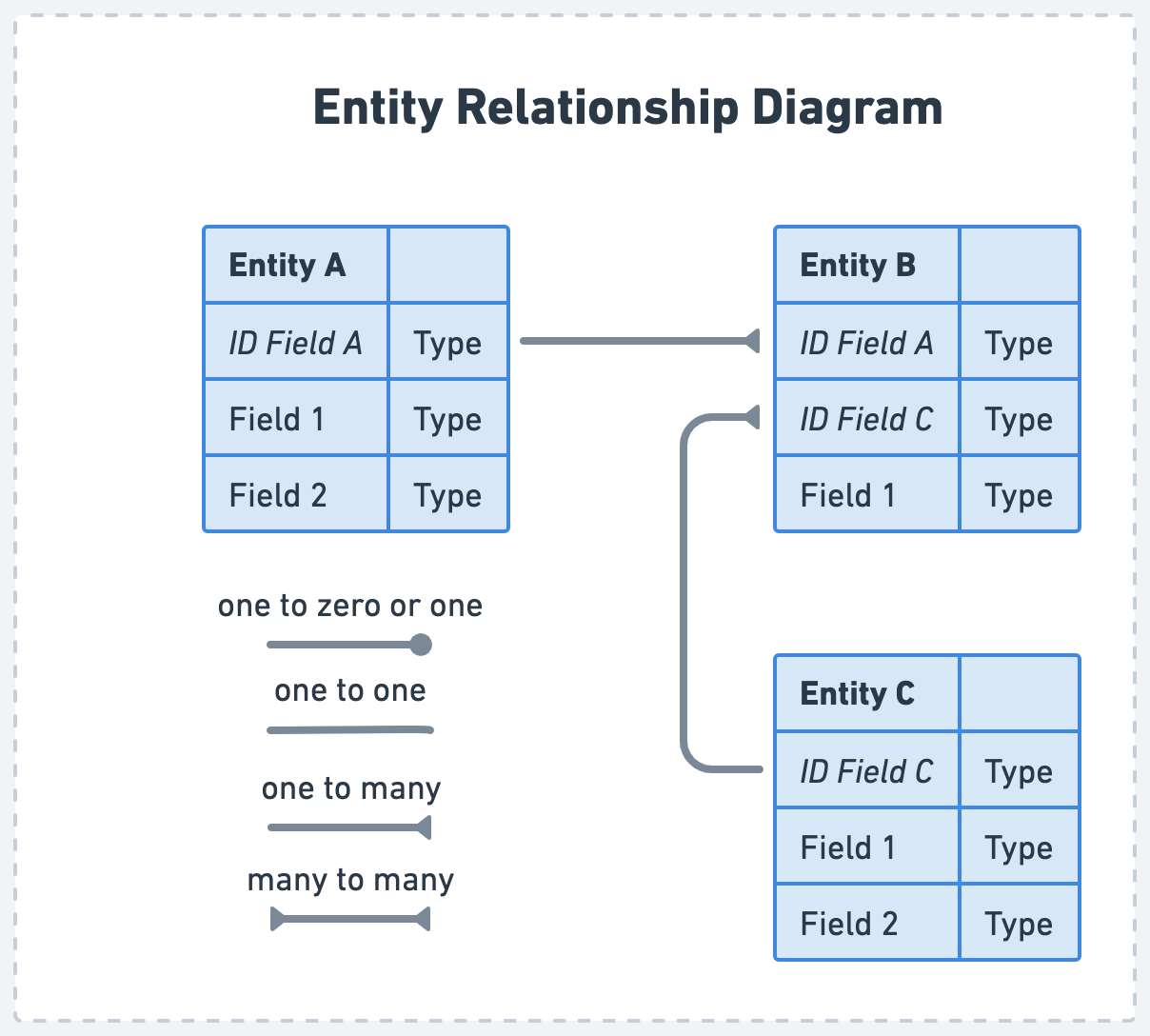
NoSQL databases, on the other hand, often offer more flexible schemas or even schemaless data storage. This flexibility can be particularly advantageous when working with diverse or dynamic data. It allows for the storage of complex or hierarchical data structures without the need for a rigid schema. However, this flexibility can also introduce challenges, such as the potential for data inconsistency or the need for complex data validation.
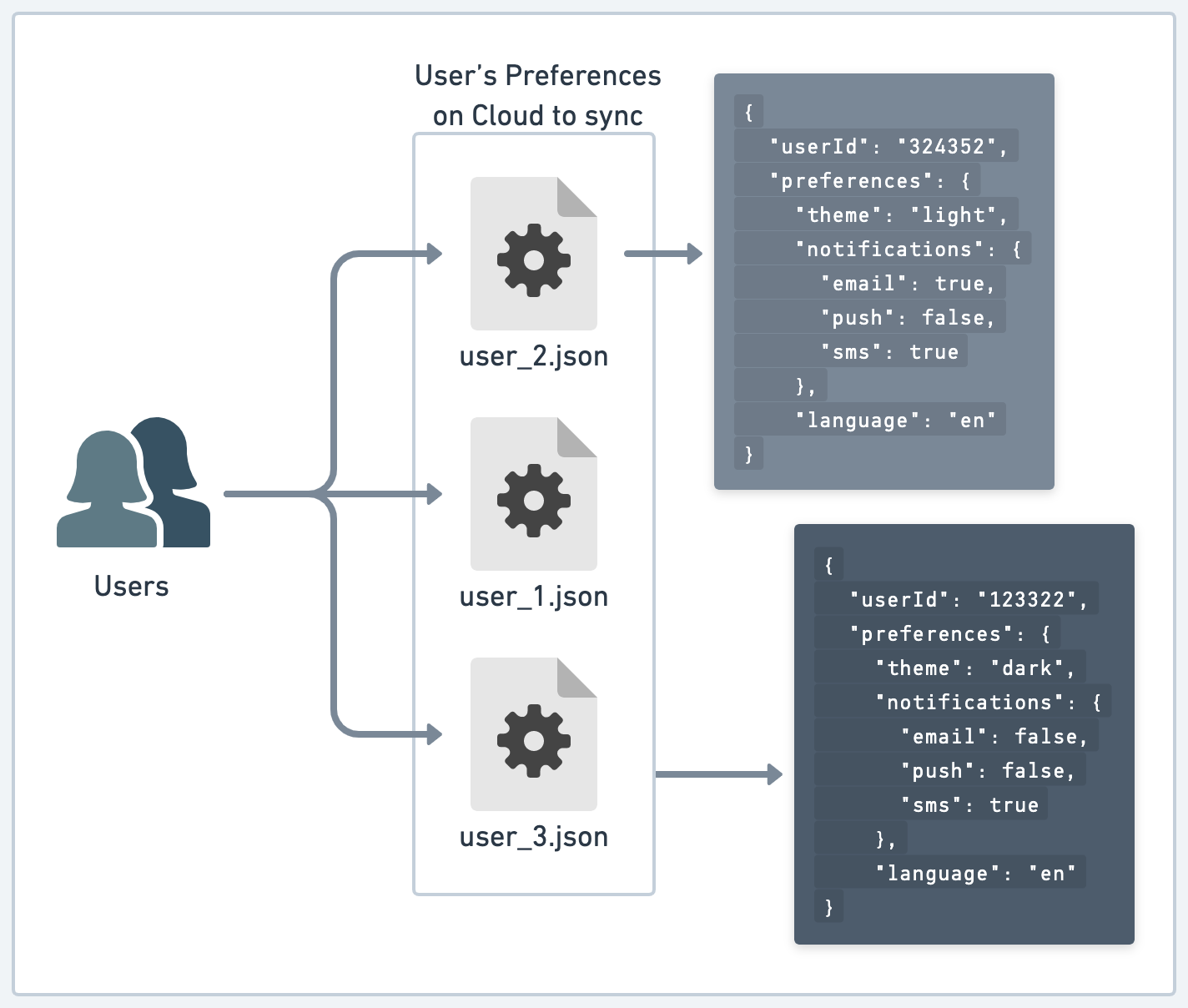
When evaluating a database's data model, it is essential to consider the complexity of the data relationships in the application. Relational databases are well-suited for applications that require complex data relationships. They provide robust support for joins and referential integrity. In contrast, NoSQL databases can be better suited for applications with more flexible data relationships, as they allow for more natural modeling of these structures.
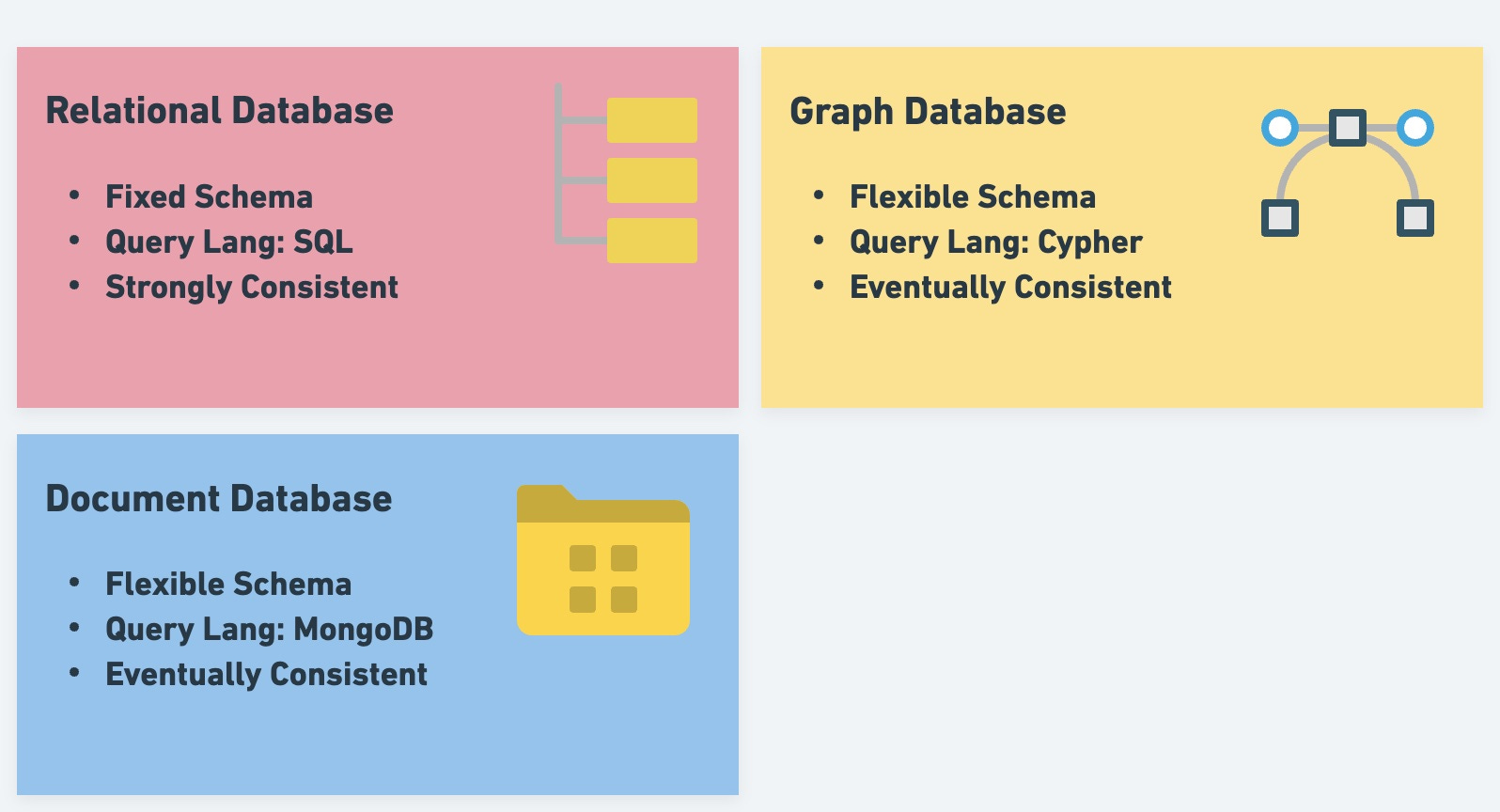
When selecting a database, consider the structure and complexity of the data the application will be handling. Assess the flexibility of the database's schema and its ability to support complex data relationships. By carefully evaluating the data model requirements of the project and understanding the strengths and limitations of different database types, we can choose a database that best suits the application's needs and ensures the effective management and retrieval of the data.
Security is an essential factor when selecting a database. It is crucial to protect sensitive data from unauthorized access and malicious attacks. Aspects to consider when evaluating a database's security features include authentication and authorization mechanisms, as well as encryption and data protection capabilities.
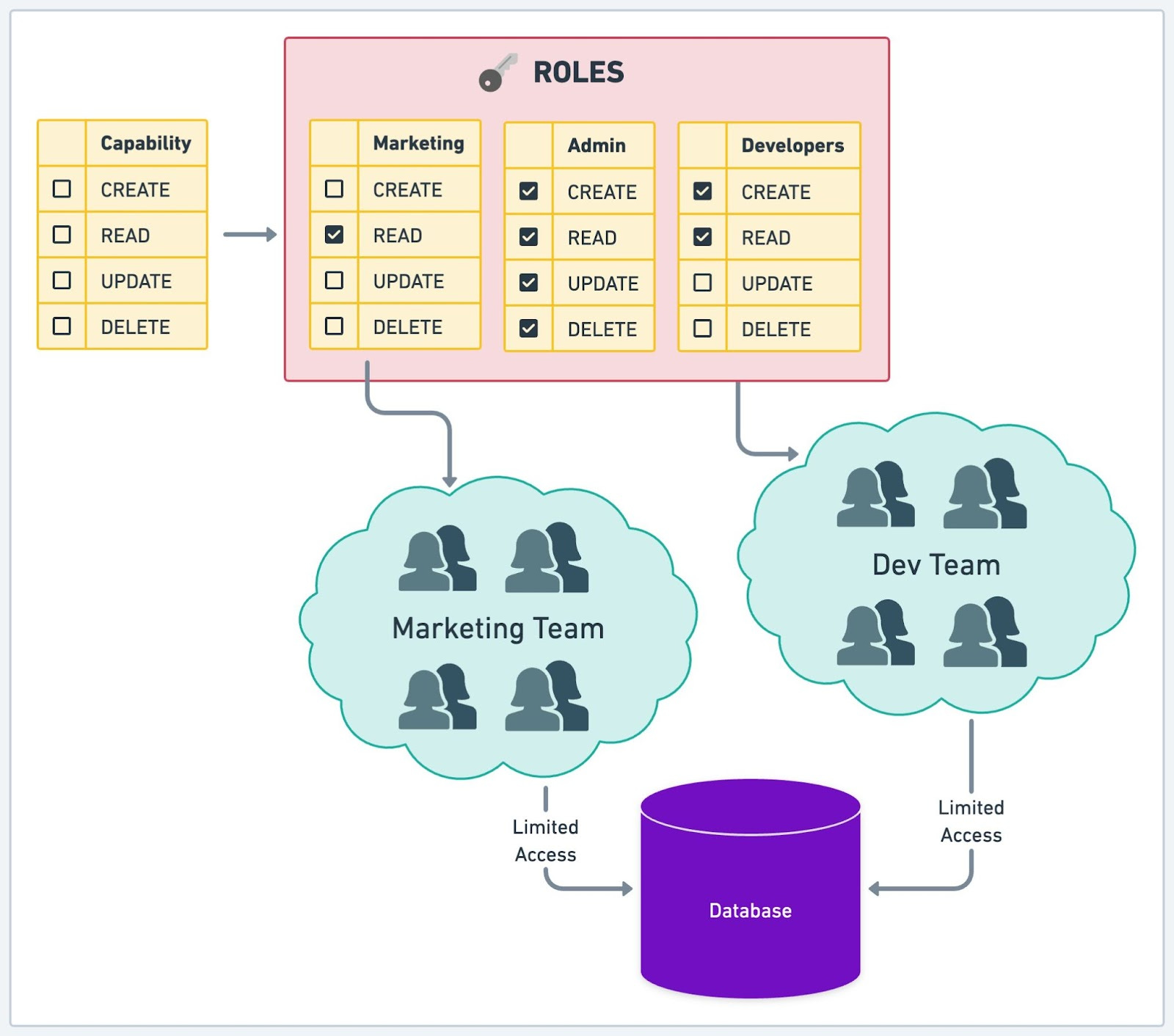
Authentication and authorization are fundamental security features that help ensure that only authorized users have access to specific data and functionalities. Databases should provide robust mechanisms for managing user accounts, roles, and permissions. Relational databases, for instance, typically offer built-in support for role-based access control. They allow administrators to define and enforce fine-grained permissions for different users.
Encryption and data protection capabilities help safeguard sensitive data, both when it is transmitted over a network and when it is stored at rest. Strong encryption algorithms, such as AES-256, can help prevent unauthorized access to data even if it is intercepted or compromised. Some databases also offer additional data protection features, such as data masking or redaction, which can help protect sensitive information from being inadvertently exposed in logs or query results.
When evaluating a database's security features, it is essential to consider not only the built-in security mechanisms but also the ease of integrating with existing security infrastructure, such as identity providers, firewalls, and intrusion detection systems. Consider the database vendor's commitment to security, including their history of addressing vulnerabilities and providing timely security updates.
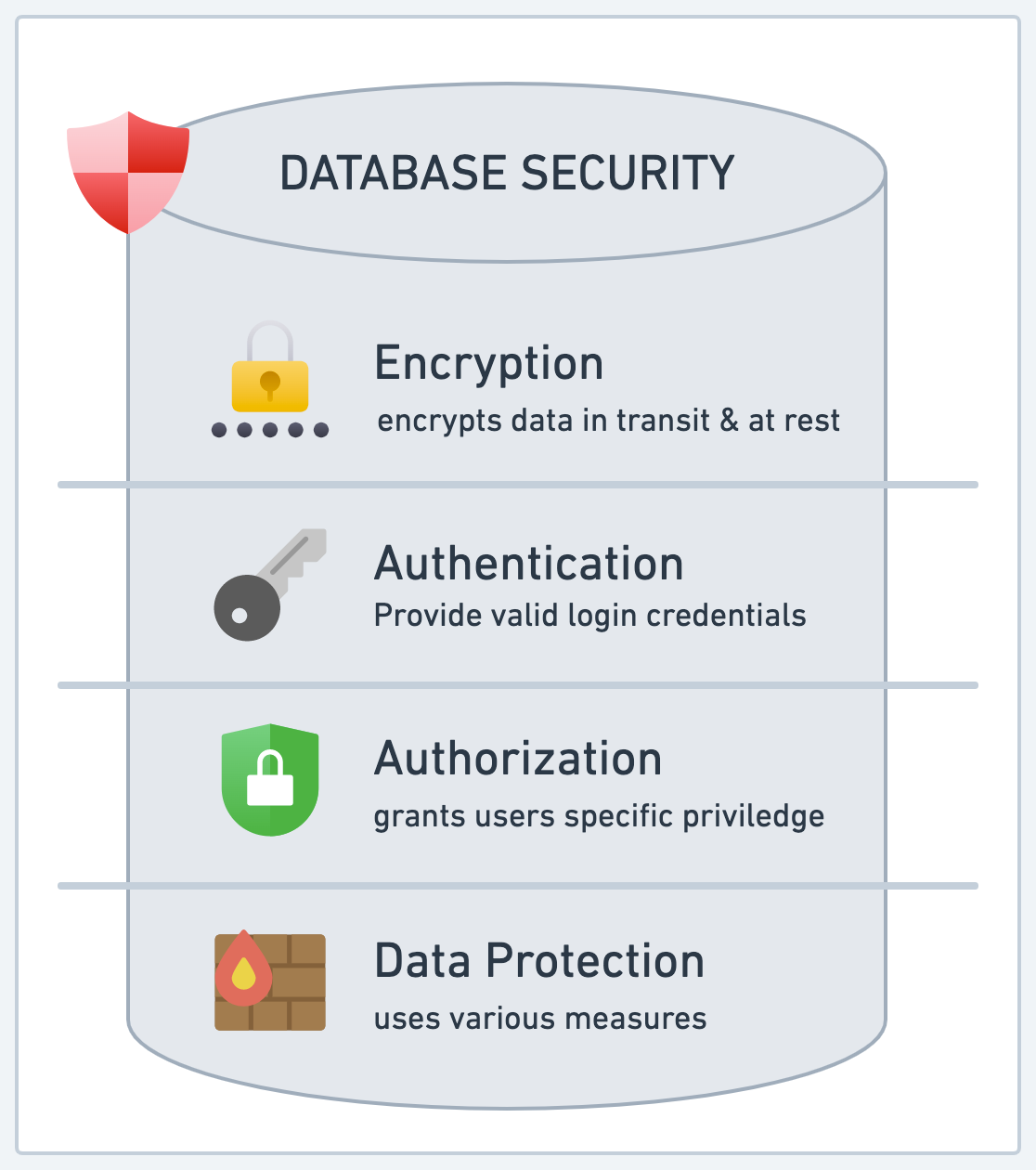
When selecting a database, prioritize security by assessing the available authentication and authorization mechanisms, encryption and data protection capabilities, and the ease of integrating with the existing security infrastructure. By carefully evaluating the security features of different database types and considering the specific security requirements of the project, we can choose a database that provides the necessary protection for the data and helps ensure the safety and privacy of the users.
Cost is a crucial factor when selecting a database. It can have a significant impact on the overall budget and profitability of the project. When considering the cost of a database, take into account licensing and hosting fees, as well as maintenance and management costs.
Licensing and hosting fees can vary considerably between different database types and vendors. Some databases, like MySQL and PostgreSQL, are open-source and can be used without incurring licensing fees, while others, such as Oracle and Microsoft SQL Server, require paid licenses. Hosting fees can also differ based on the deployment model we choose, whether it is self-hosted, cloud-based, or managed by a third-party provider.
Maintenance and management costs are equally important to consider. They can significantly impact the total cost of ownership (TCO) of a database. These costs include hardware and software upgrades, staff training, and the effort required to maintain, troubleshoot, and optimize the database. Some databases are more complex to manage and maintain than others, which can result in higher costs and a steeper learning curve for the team.
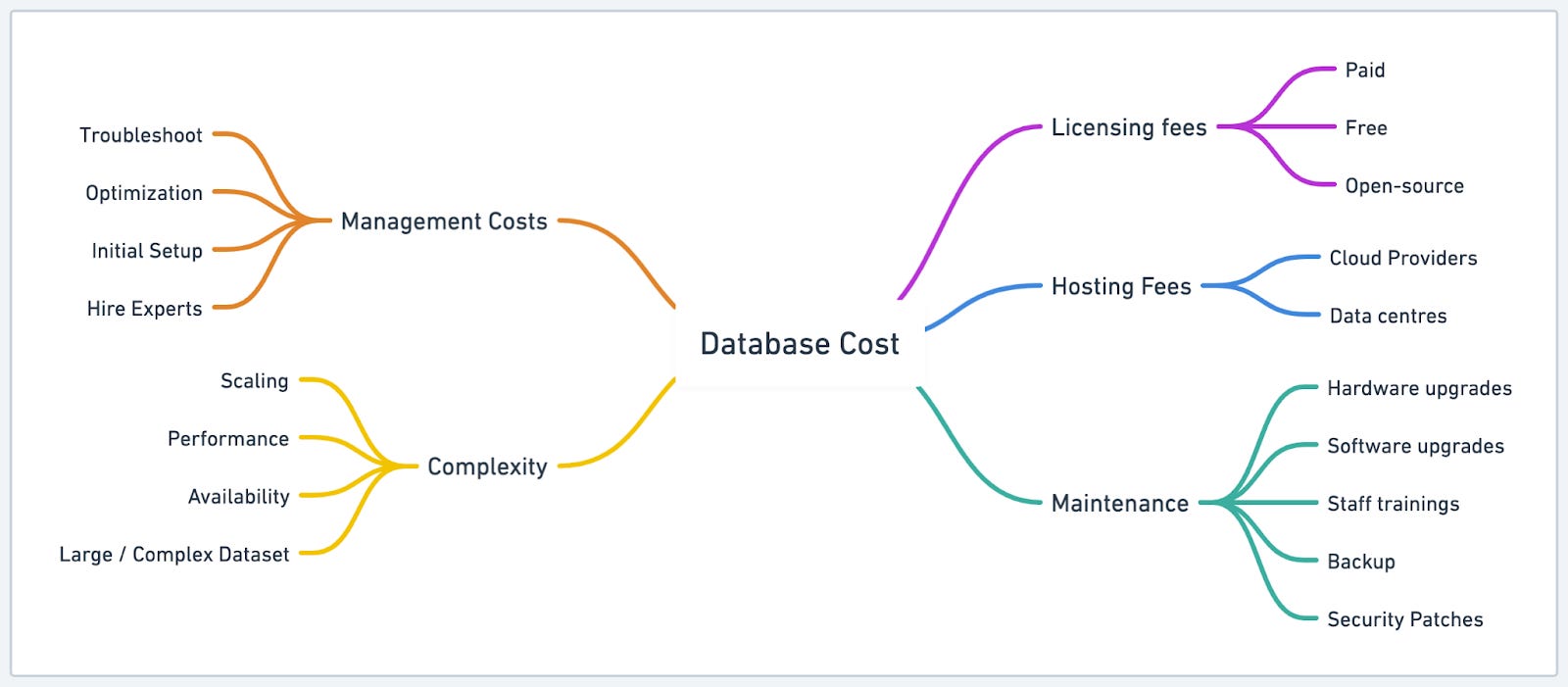
When selecting a database, it is essential to carefully evaluate the costs associated with each option and weigh them against the benefits and features they provide. By understanding the licensing and hosting fees, as well as the maintenance and management costs of different database types, we can make a cost-effective decision that aligns with the project's budget and provides the necessary functionality and performance for the application.
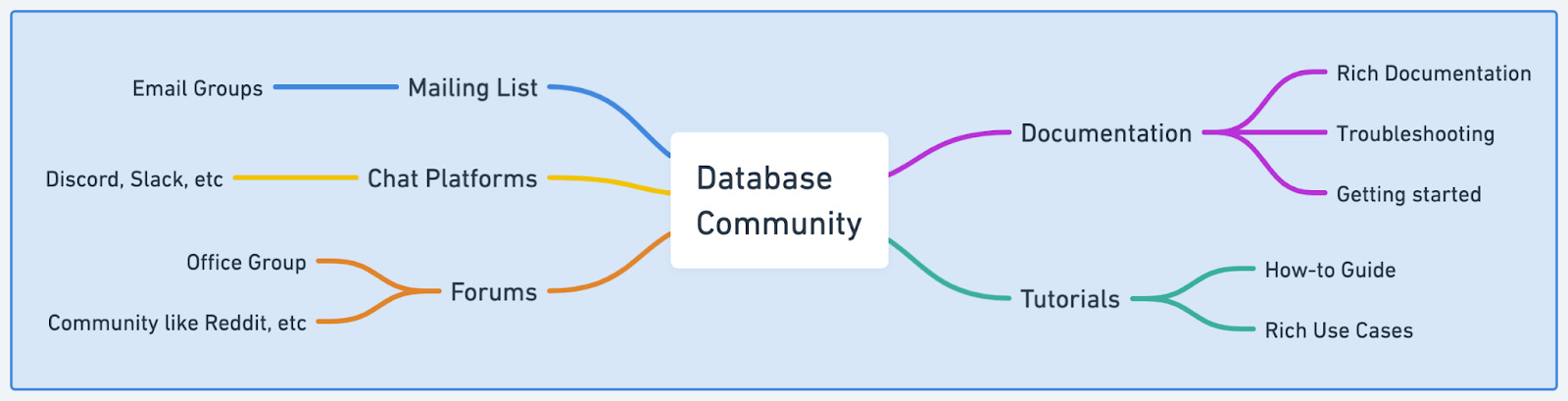
Community and ecosystem are vital factors to consider when selecting a database. They can significantly impact the ease of adoption, integration, and ongoing support for the chosen database. A strong community can provide valuable resources, such as documentation, tutorials, and forums, while a robust ecosystem can offer integration with other technologies, tools, and services.
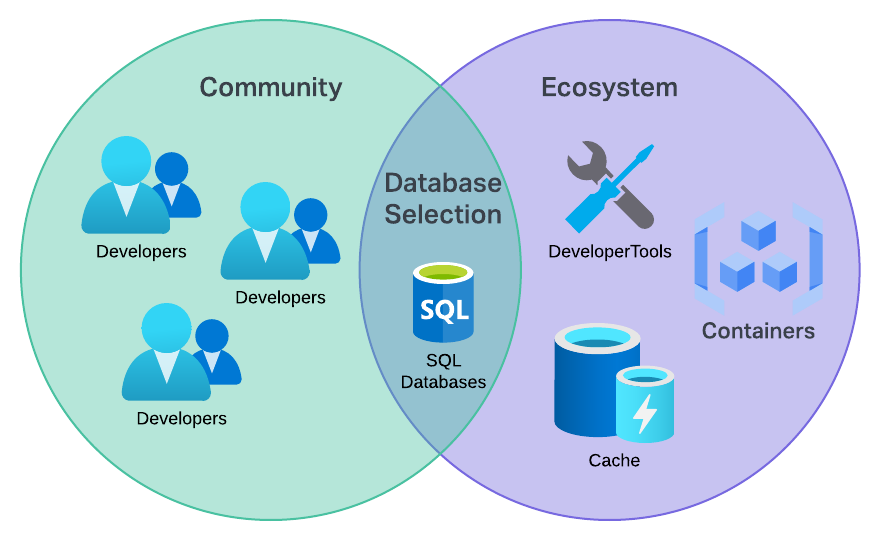
Developer resources and support are essential for the successful adoption and use of a database. A well-established community can provide a wealth of knowledge and experience. It makes it easier to troubleshoot issues, learn best practices, and optimize the database's performance. When evaluating a database, consider the availability of documentation, tutorials, and support channels, such as forums, mailing lists, and chat platforms.
Integration with other technologies is another crucial aspect of a database's ecosystem. A database with a robust ecosystem will typically offer pre-built connectors, libraries, and tools for working with various programming languages, frameworks, and services. This compatibility can streamline development and simplify the process of incorporating the database into the existing technology stack.
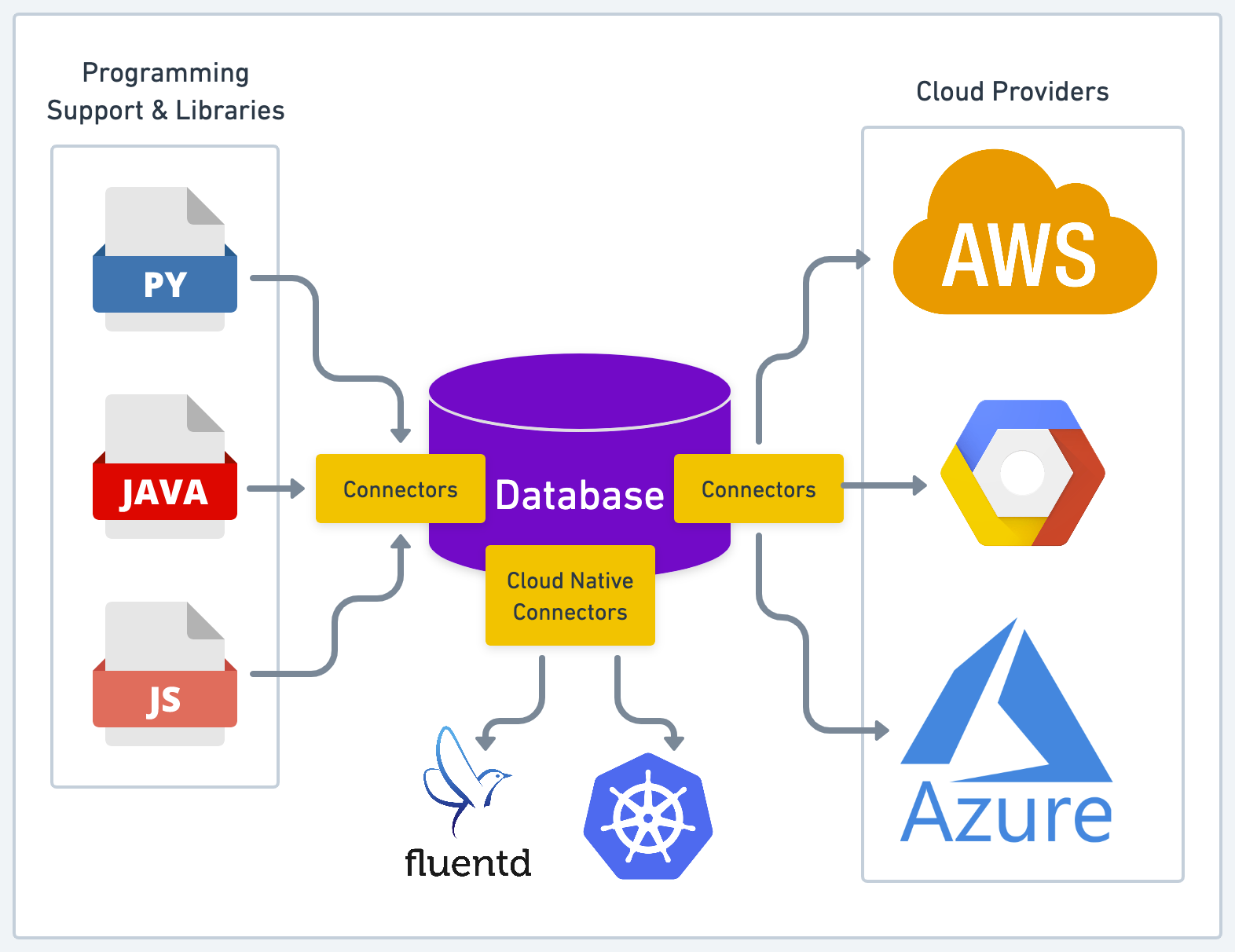
When selecting a database, it's essential to consider the strength of the community and ecosystem surrounding it. Evaluate the availability of developer resources and support, as well as the ease of integration with the existing technology stack. By choosing a database with a strong community and ecosystem, we can ensure a smoother adoption process, access valuable resources and support, and simplify the integration with the existing technologies.
Throughout this second part, we have deepened our understanding of the essential factors that influence database selection. With this knowledge in hand, we are well-equipped to approach the decision-making process with greater confidence and clarity. As we move on to the third part of our series, we will walk through the practical steps involved in selecting the ideal database for our specific project. Stay tuned as we continue our journey to mastering the art of database selection.