
This week’s system design refresher:
Backend Burger for Developers (Youtube video)
DevOps vs. SRE vs. Platform Engineering
HTTP status codes
Components of a URL
What makes a good error message?
Job openings
With a streamlined workflow and expert guidance, Secureframe automates the entire compliance process, end-to-end.
What makes Secureframe different?
Get audit-ready and achieve compliance in weeks, not months with built-in remediation guidance and 100+ integrations.
Stay compliant with the latest regulations and requirements including ISO 27001, GDPR, HIPAA, PCI, and other standards.
Automate responses to RFPs and security questionnaires with AI.
Trusted by hyper-growth organizations: AngelList, Ramp, Lob, Remote, and thousands of other businesses.
Everyone loves burgers, whether it's a full stack burger, a frontend burger, or a backend burger.
While the origin of this innovative burger is unknown, a comparable full-stack burger was shared on Reddit four years ago. We want to give a special shout-out to the original creators.
The concepts of DevOps, SRE, and Platform Engineering have emerged at different times and have been developed by various individuals and organizations.
By guest author Xiong Wang
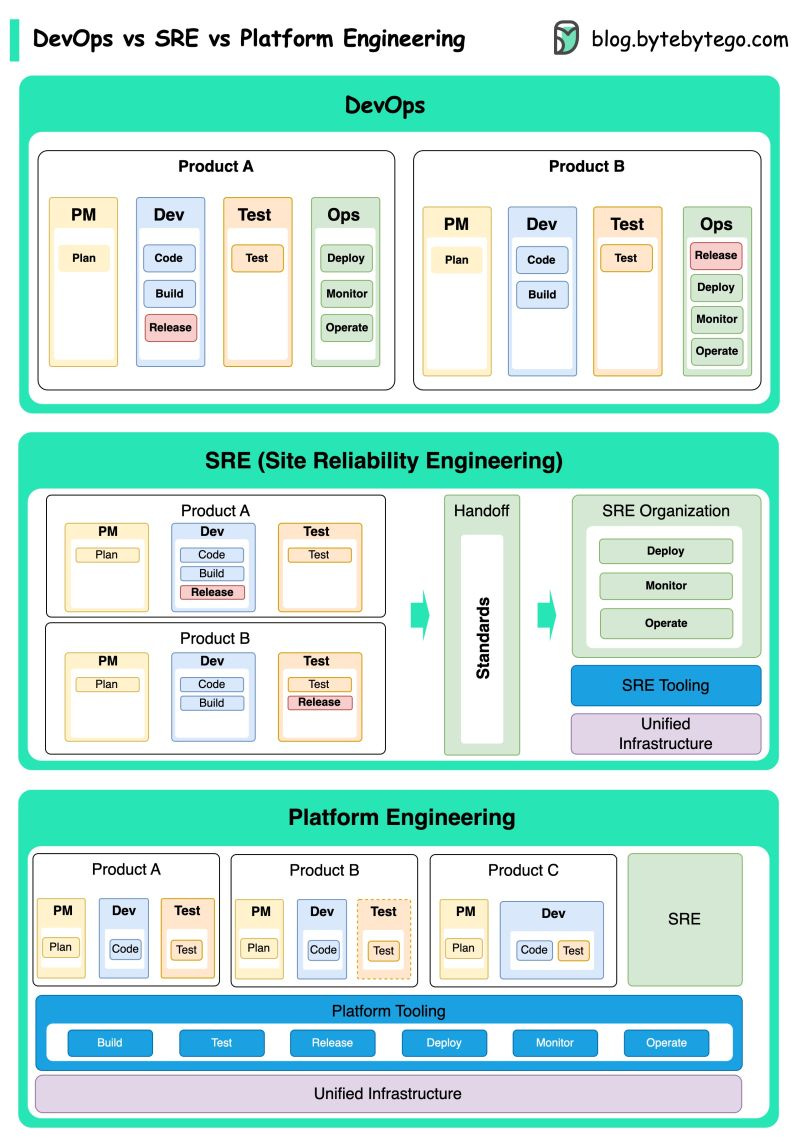
DevOps as a concept was introduced in 2009 by Patrick Debois and Andrew Shafer at the Agile conference. They sought to bridge the gap between software development and operations by promoting a collaborative culture and shared responsibility for the entire software development lifecycle.
SRE, or Site Reliability Engineering, was pioneered by Google in the early 2000s to address operational challenges in managing large-scale, complex systems. Google developed SRE practices and tools, such as the Borg cluster management system and the Monarch monitoring system, to improve the reliability and efficiency of their services.
Platform Engineering is a more recent concept, building on the foundation of SRE engineering. The precise origins of Platform Engineering are less clear, but it is generally understood to be an extension of the DevOps and SRE practices, with a focus on delivering a comprehensive platform for product development that supports the entire business perspective.
It's worth noting that while these concepts emerged at different times. They are all related to the broader trend of improving collaboration, automation, and efficiency in software development and operations.
Over to you: Which topics would you like us to address in our next discussion?
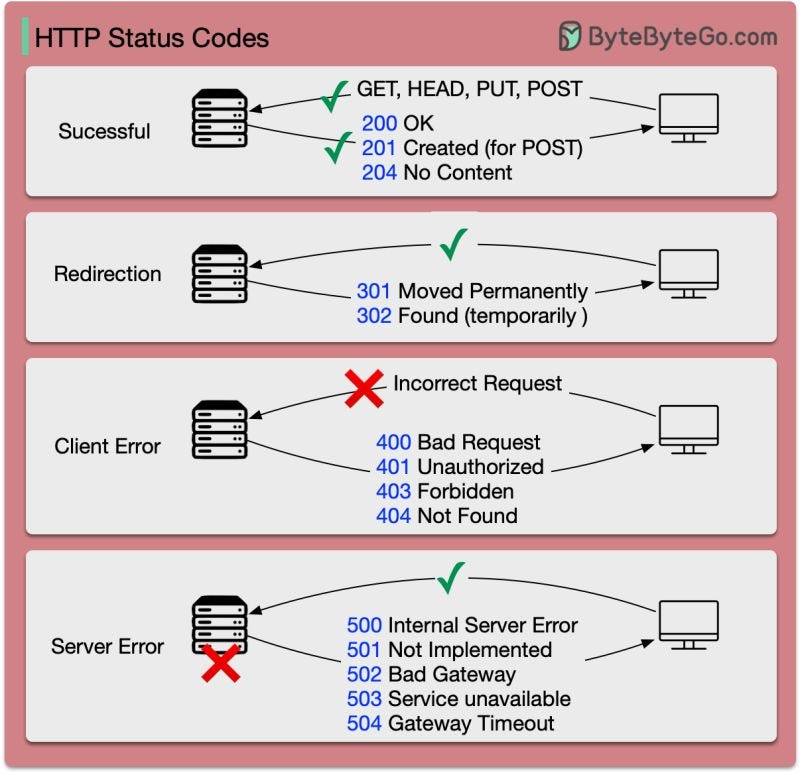
The response codes for HTTP are divided into five categories:
Informational (100-199)
Success (200-299)
Redirection (300-399)
Client Error (400-499)
Server Error (500-599)
These codes are defined in RFC 9110. To save you from reading the entire document (which is about 200 pages), here is a summary of the most common ones:
Over to you: HTTP status code 401 is for Unauthorized. Can you explain the difference between authentication and authorization, and which one does code 401 check for?
Uniform Resource Locator (URL) is a term familiar to most people, as it is used to locate resources on the internet. When you type a URL into a web browser's address bar, you are accessing a "resource", not just a webpage.
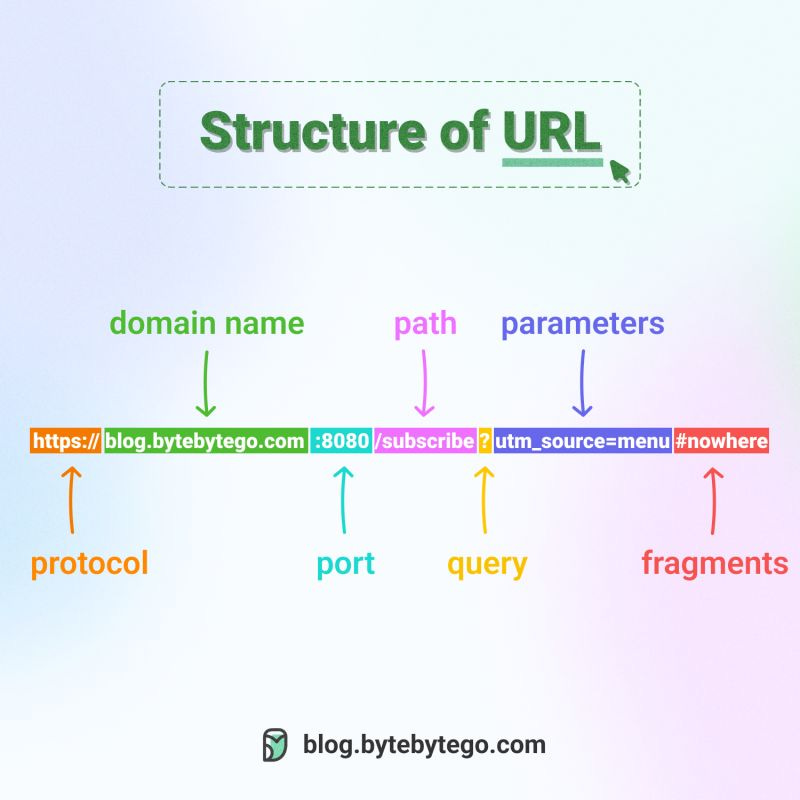
URLs comprise several components:
The protocol or scheme, such as http, https, and ftp.
The domain name and port, separated by a period (.)
The path to the resource, separated by a slash (/)
The parameters, which start with a question mark (?) and consist of key-value pairs, such as a=b&c=d.
The fragment or anchor, indicated by a pound sign (#), which is used to bookmark a specific section of the resource.
"When life gives you lemons, write better error messages" by Jenni Nadler.

I hope everyone writes better messages :) It makes everyone's life so much easier. The link to the original article is here.
Over to you - what's the best and worst error message you've seen?
If you’re looking for a new gig, join the collective for customized job offerings from selected companies. Public or anonymous options are available. Leave anytime.
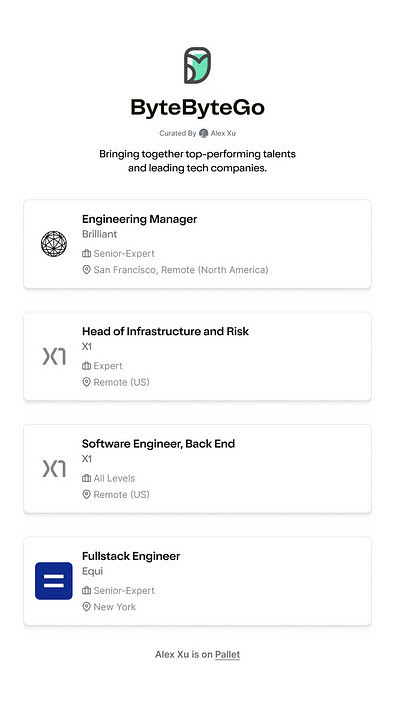
If you’re hiring, join the ByteByteGo Talent Collective to start getting bi-monthly drops of world-class hand-curated engineers who are open to new opportunities.
X1 Card: Software Engineer, Back End (United States)
X1 Card: Head of Infrastructure and Risk (United States)